
The Mind Children coda examined
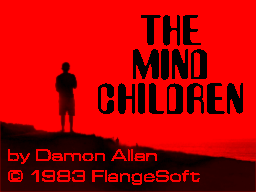
Fonz famously jumped the shark. Killing Eve and A Very Peculiar Practice should only have had one series each. So perhaps I shouldn’t have brought The Mind Children back for two final episodes, irritatingly tagged episodes 7 and 8 of 6.
But I did, and so here’s a little round-up of some of the influences and inspirations behind Bob and Dave’s last hurrah.
Firstly, the whole idea of an adventure game had been at the back of my head for a while. Ideally I would have built the game into the original story arc, but there were difficulties there: I’d set it in 1979 which was before the real home computer boom had taken off. There were Apple ][s and Commodore PETs but no Sinclair ZX81s or Amstrads (though I did allude to the coming of such devices in ‘The Death of the Author’).
The other problem was that I wanted to put a real game online. I’d used Inform7 previously to make an interactive fiction about doing a nightshift in the BBC World Service in 1991, and also to do some world-building for an historical novel I was failing to finish (and which may surface on Listen with Other one day). But I’d forgotten how to write for Inform7, although I did start to learn it again, and produced a version you can play here.
I also really wanted to learn how to use The Quill, the contemporary tool used to write many text-based adventures for the ZX Spectrum and other home computers in the 1980s. It’s what The Games Mistresses used to write The Secret of St Bride’s, a game I got a bit obsessed with in lockdown, along with its extraordinary authors.
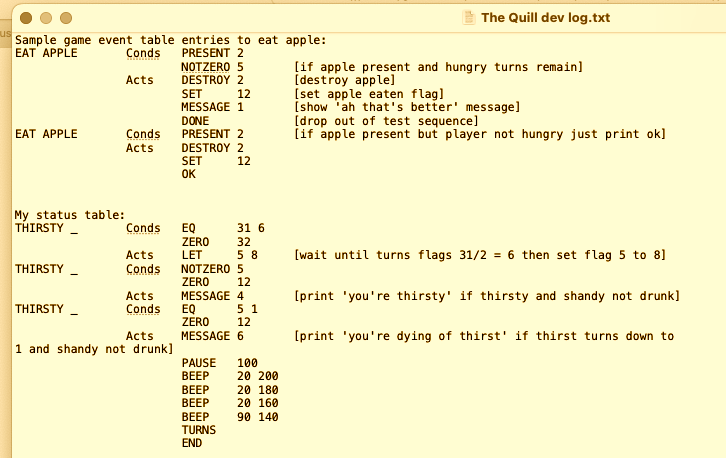
Learning The Quill took a long time, but once I finally had the correct manual for the correct version, I made rapid progress, and you can play the results here. I should probably write up my experiences of learning The Quill - maybe I picked a bad time to kill my old 'BlogMyWiki' blog...
So what about other references in episodes 7 and 8?
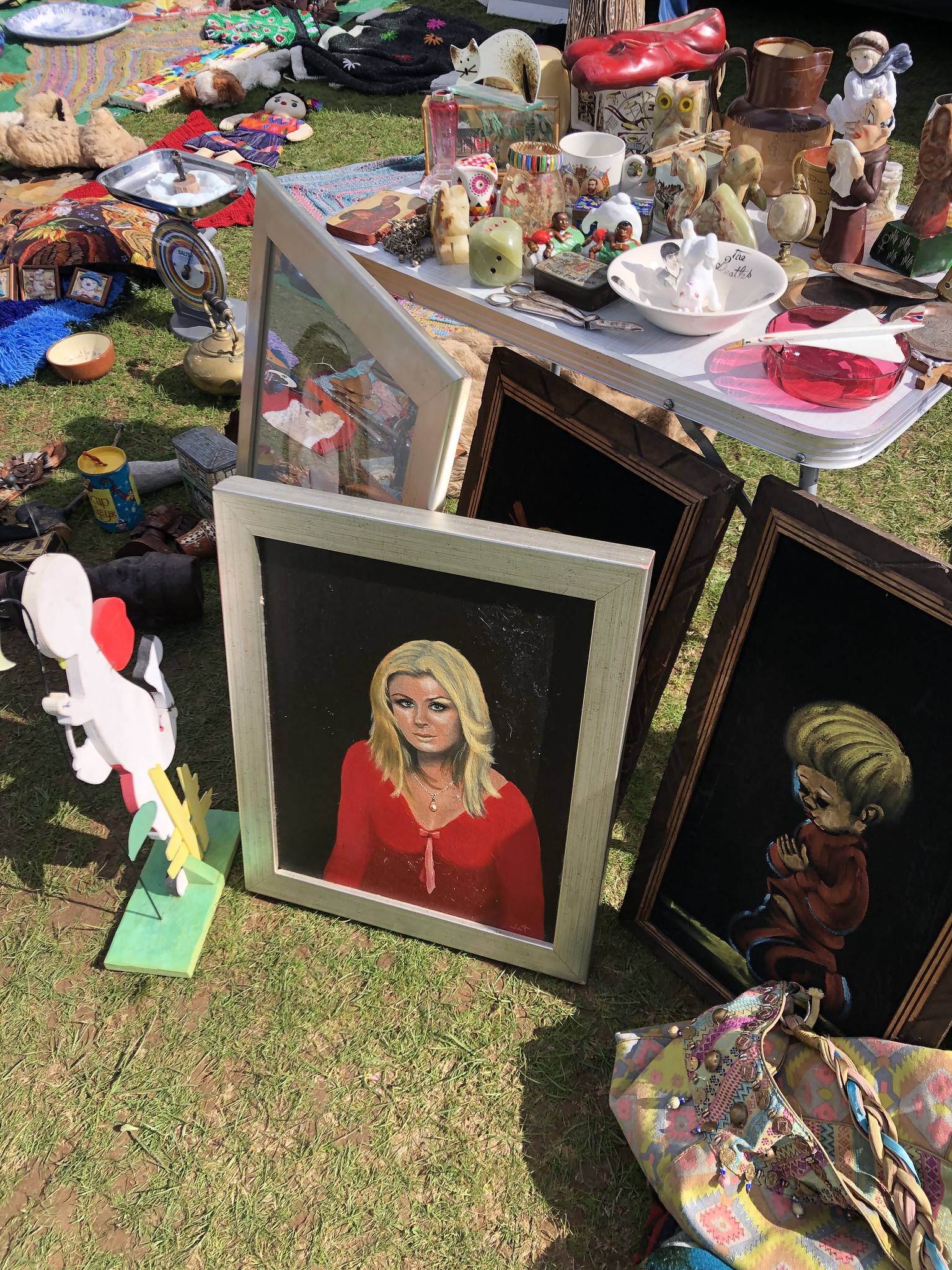
The car boot fair Bob went to in West Penwith is real, it’s on most Wednesdays in Roseudgeon, weather-permitting. I mentioned Carpenters and Peters & Lee cassettes because they’re what I remember from interminable car trips on family holidays in the 1970s.
Bob says he always wanted a ZX81 and never got one but was thrilled with the ZX Spectrum he finally got for Christmas. The Spectrum was the first computer that I could call my own, but my dad had a Commodore PET for which one of my older brothers and I wrote a game called Surias, which I recently restored from an ancient dot-matrix printout. But the machine I wanted and never got was actually an Acorn System 1. It would be worth a fortune today. Incidentally, that older brother was a friend of the TV writers Bob Baker and Dave Martin, whose names inspired Bob and Dave.
Flange kind of inevitably came out as the over-arching force behind everything once I had decided to put the ‘FlangeSoft’ label on the 1982 version of The Mind Children game. I think it's hinted that The Founder (and podcast sponsor) has been pulling some strings since episode 1.
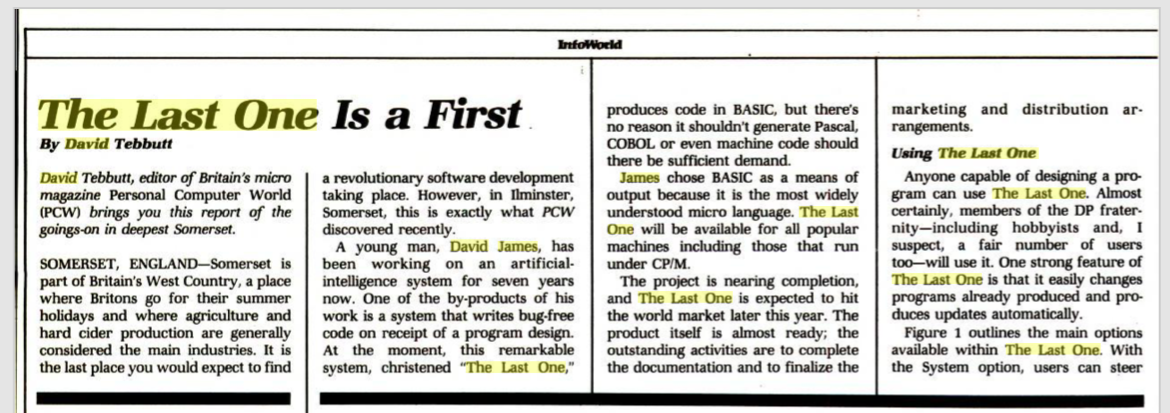
‘The Final Program’ – the computer program to end all computer programs – was real. The Last One was very much-hyped in the computer press in the early 1980s, foreshadowing ‘vibe coding’ by many decades. I just discovered that, like Bob and Dave and The Mind Children, The Last One was made in Somerset by a company called DJ "AI" Systems, which seems very fitting. Its natural language prompts not only remind me of coding with LLMs today, but also Cameron’s friendly 1980s personal computer OS user interface in season 1 of Halt and Catch Fire that was junked to save cost. I chose to rename it 'The Final Program' as a nod to the techno-apocalyptic 1973 film and 1968 novel The Final Programme, neither of which I have seen or read.
We’re also back in Stanton Maltravers, the ‘real’ Somerset village where Bob and Dave grew up, and where the opening sequence of The Mind Children TV series was filmed. It’s also, of course, the setting of my very first Listen with Other story. ‘The Merry Milkmaids’ and you may notice that Dave’s visit to the Flange corporate historian in episode 7 takes place at the same time and place as ‘The Merry Milkmaids’, as the same storm (‘it’s the same rain’) hits, the same radio weather warning, and the same fire engine.
The historian pointedly saying ‘fire or flooding’ is a reference to Mr Blint in the 1977 triple album Consequences by Godley & Creme and Peter Cook, who says the same thing.
The Flange ad tag-line ‘pod will eat itself’ is a reference to the band ‘Pop Will Eat Itself’ who were named after a line written by David Quantick, who will shortly be doing a guest turn on Listen with Other.
The ancient chatbot ‘Eliza’ is real, it has a long history: https://en.wikipedia.org/wiki/ELIZA
And the final reference to a forgotten book Bob found in Barnstaple, well… who can say if Bob and Dave will return to explore it and its elusive author..?
You should also read:
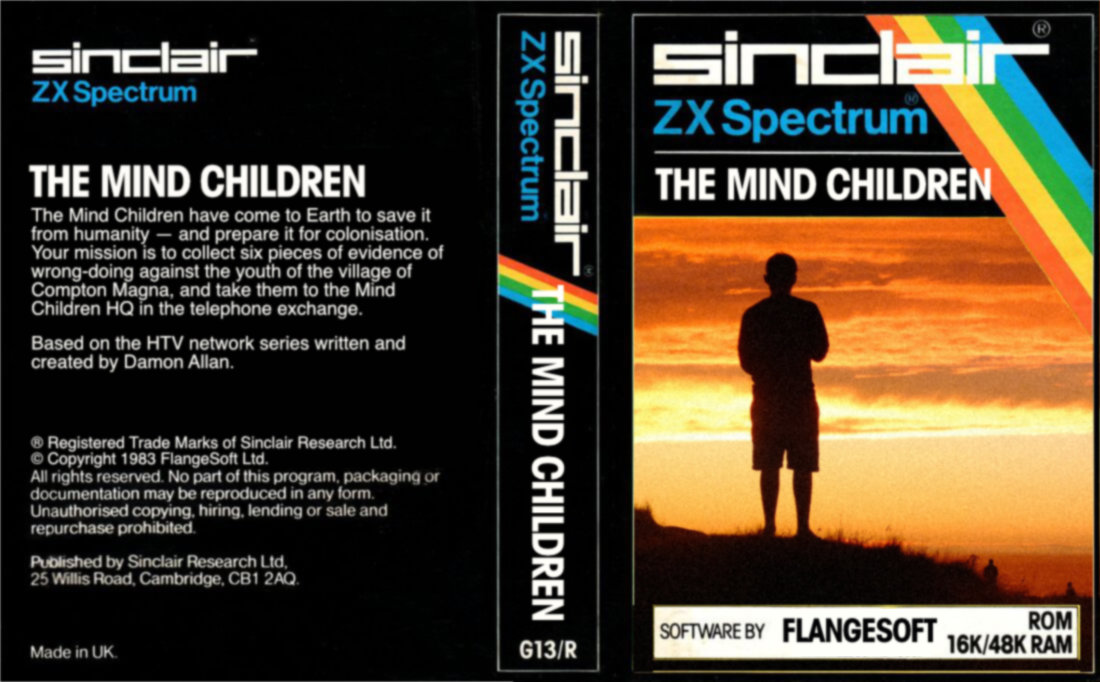
Mind Children ZX Spectrum game
At a car boot fair, Bob made an extraordinary discovery. He found an old cassette in a pile of junk - a ZX Spectrum adventure game based on The Mind Children! It dates from 1983, four whole years after the series was broadcast and cancelled,…
Continue reading...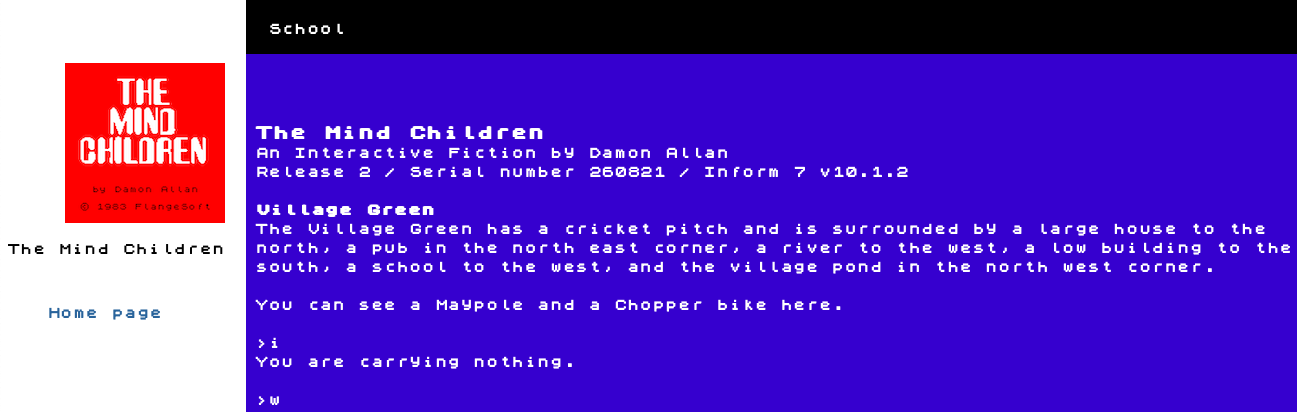
The Mind Children interactive fiction
I'm writing a text-based adventure based on The Mind Children using (almost) period software - The Quill for the Sinclair ZX Spectrum. It's been quite a journey, with various manuals that didn't match the version I was using, and scanned OCR manuals with errors in,…
Continue reading...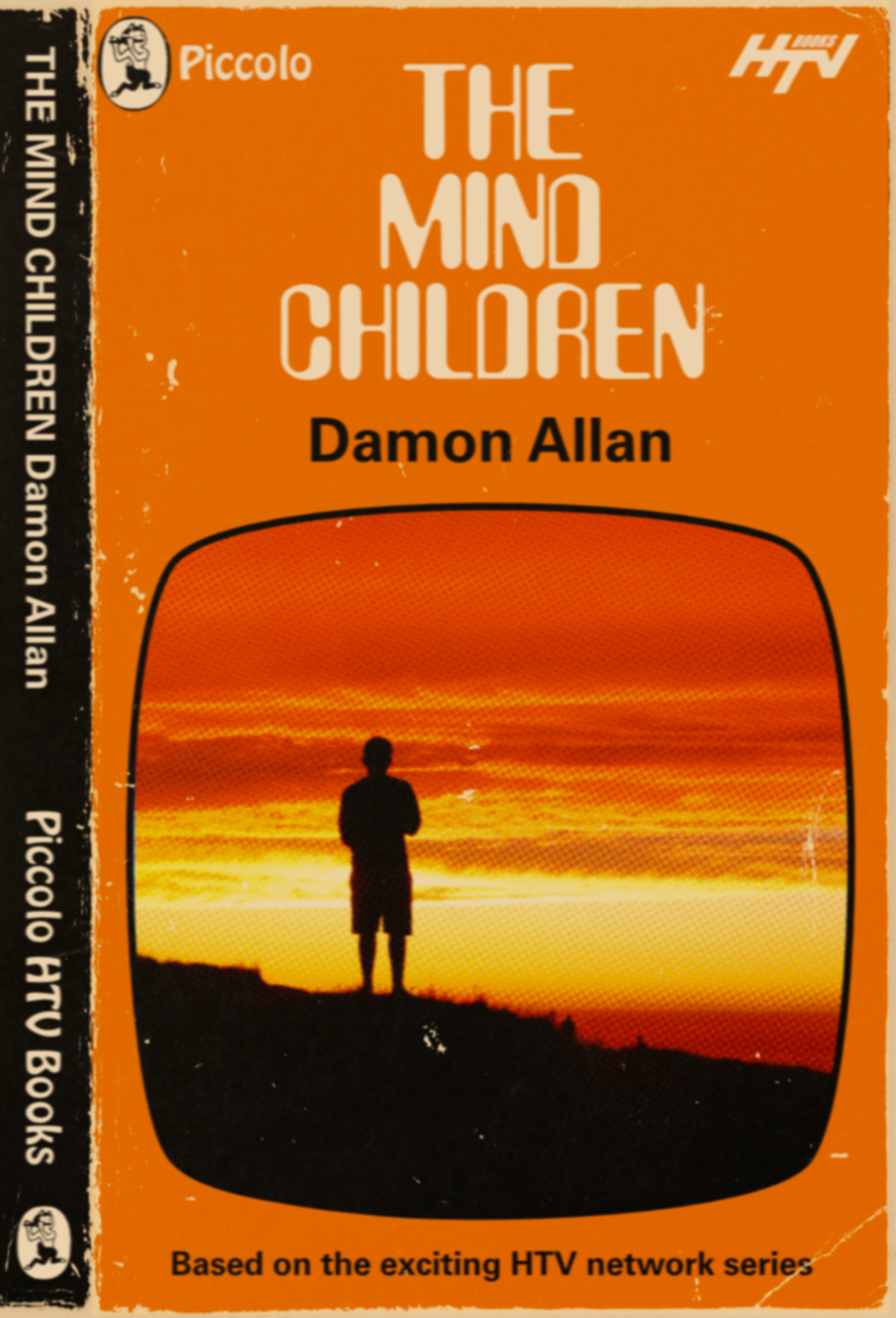
Inspirations for The Mind Children
A post on the inspirations and references used in series 9 of Listen with Other, The Mind Children. First up, of course, its main inspiration was The Tomorrow People. What if HTV had made something like it? What if it were cancelled? What if The…
Continue reading...